


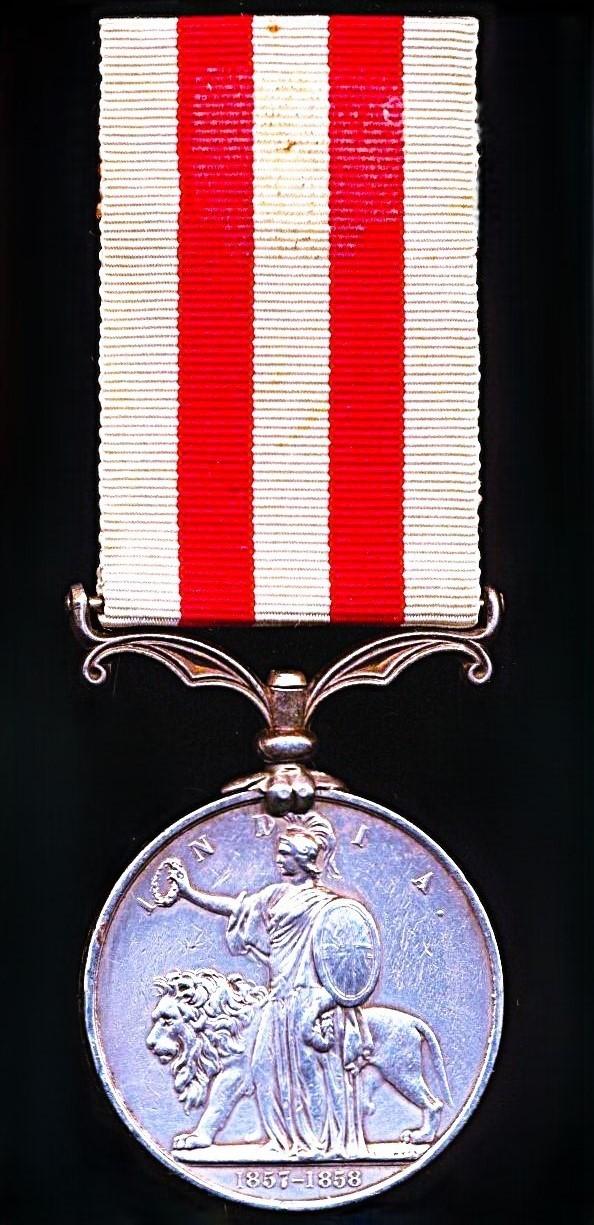
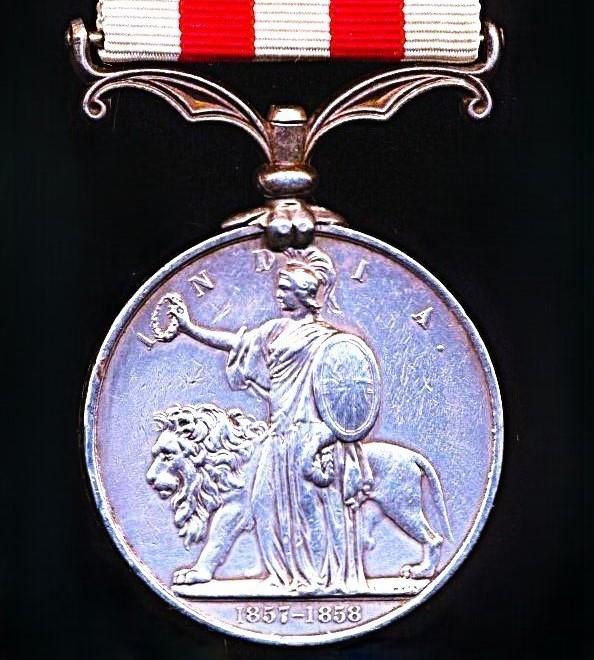
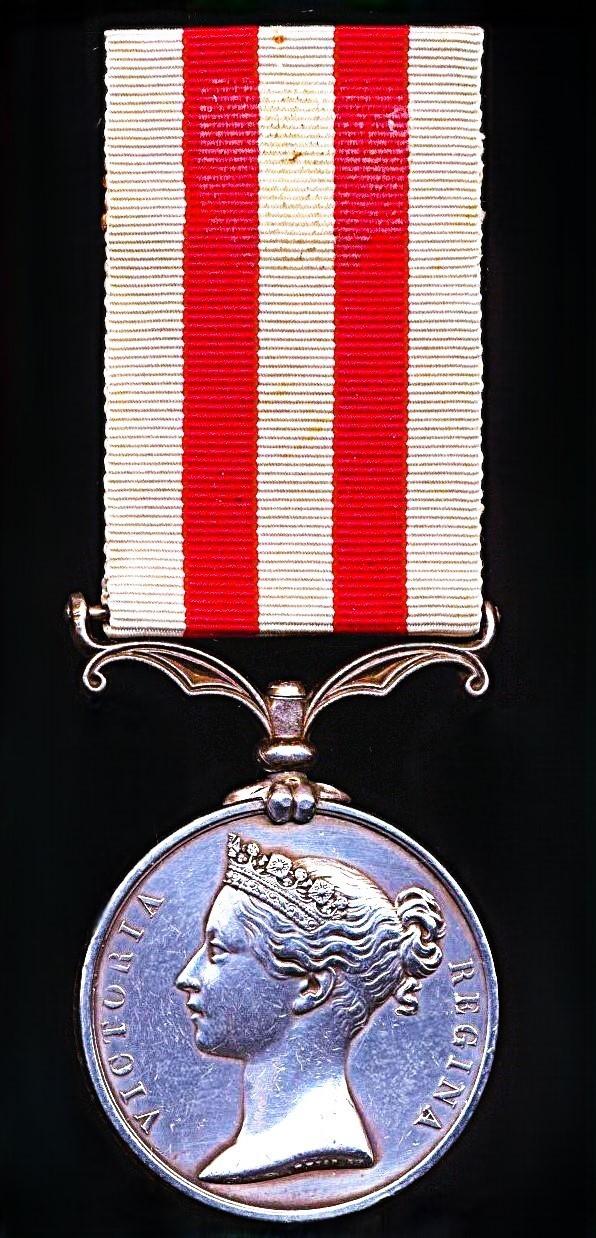
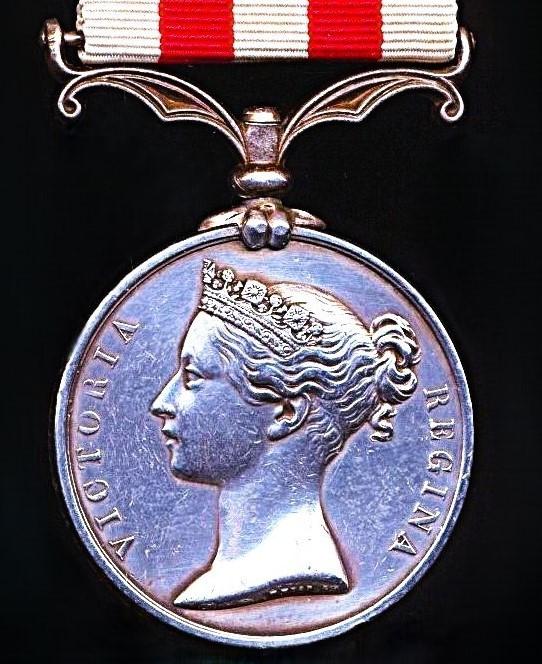
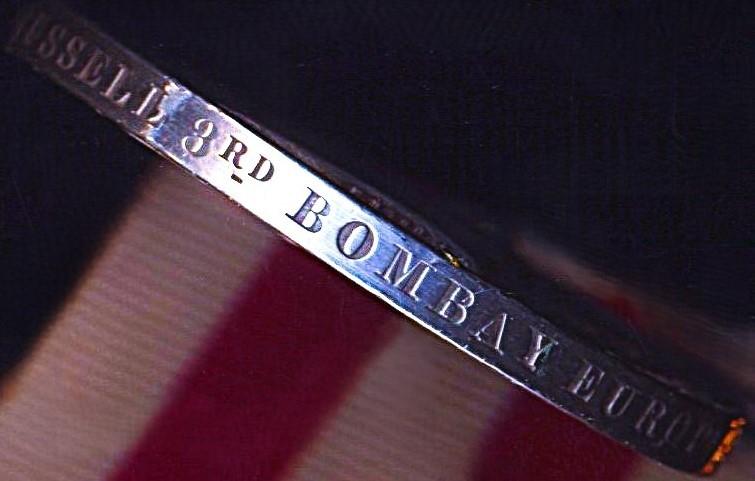
Indian Mutiny Medal 1857-58. No clasp (Charles. Russell, 3rd Bombay Eurpn. Regt.)
Provenance: The Michael McGoona Collection to the Leinster Regiment (DNW, London, June 2000)
Reference the 'Registers of Bombay Army European Soldiers 1851-1857' in the file series L/MIL/12/114 (from the former India Office records held in the collection of the British Library), there was only one soldier of the name, Charles Russell, who served as an 'Other Rank' with the Bombay Army of the Honourable East India Company
Charles Russell was a native of Warwick, Warwichshire, England. Prior to entering the service of the Honourable East Indian Company in 1856, he had been employed as a 'Labourer'. He enlisted at Bristol, England, when he attested for the HEIC Land Forces on, 27 June 1856, for a contracted period of 10 years service. Charles subsequently embarked for India aboard the 'Queen Victoria' for his voyage to India. On arrival in India, he was posted to the newly raised 3rd Battalion European Regiment, an infantry regiment of the HEIC's Bombay Army
The 3rd Bombay European Regiment: The regiment was raised at Poona (now Pune) India, in 1853 by the East India Company, using volunteers from the 1st Bombay Fusiliers and the 2nd Bombay Light Infantry, together with new recruits recently sent to India from the Company’s depot at Warley in Essex.The regiments first official title was the 3rd Bombay (European) Regiment, reflecting the place of its raising, the regiment was also kwon by its nickname 'The Poona Pets'. During the Indian Mutiny (1857-59) the regiment served in Central India where Private Whirlpool of the regiment won a Victoria Cross
Following the passing of the Government of India Act 1858, that transferred power from the British East India Company to the British Government, the 3rd Bombay European Regiment was incorporated into the British Army as the 109th Regiment of Foot. Between 1864 to 1866, the 109th was based in Aden Colony, where it took part in punitive expeditions into the South Arabia hinterland. The regiment returned to India, where it remained until 1877, when it embarked for its first tour in the United Kingdom. It was while serving at Aldershot in 1881, that the 109th was amalgamated with the 100th (Prince of Wales's Royal Canadian Regiment) and restyled as 2nd Battalion The Prince of Wales's Leinster Regiment (Royal Canadians). The descendent regiment - The Leinster Regiment - was disbanded in 1922, on the establishment of the Irish Free State
Condition: About VF
Code: 25700
250.00 GBP