


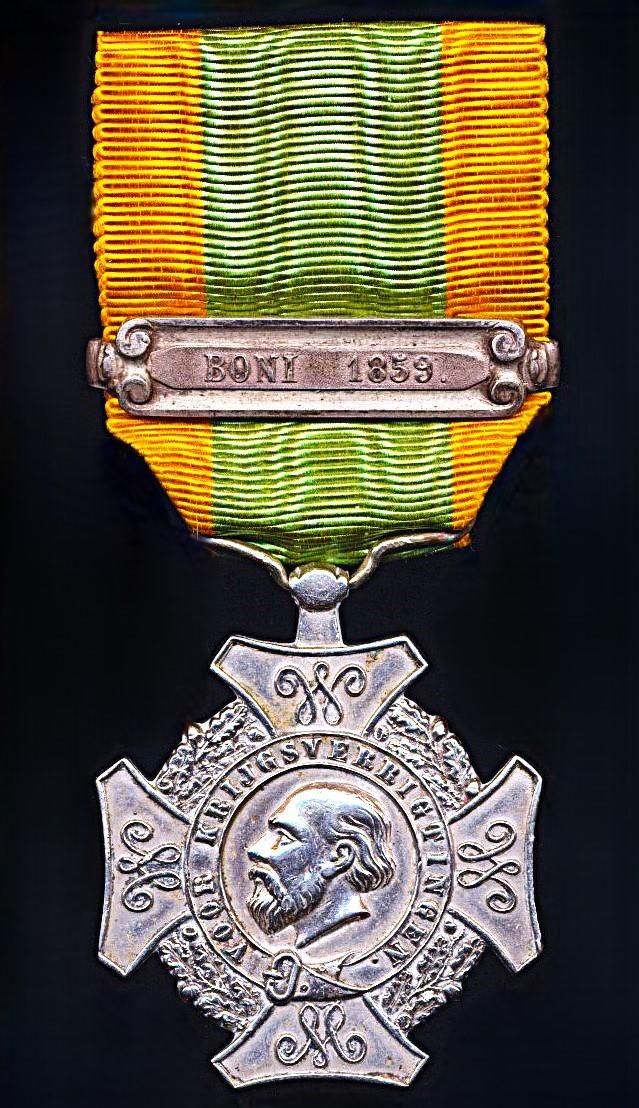
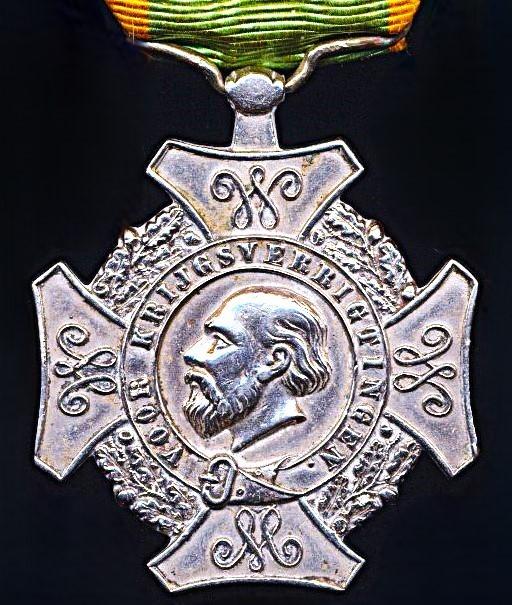
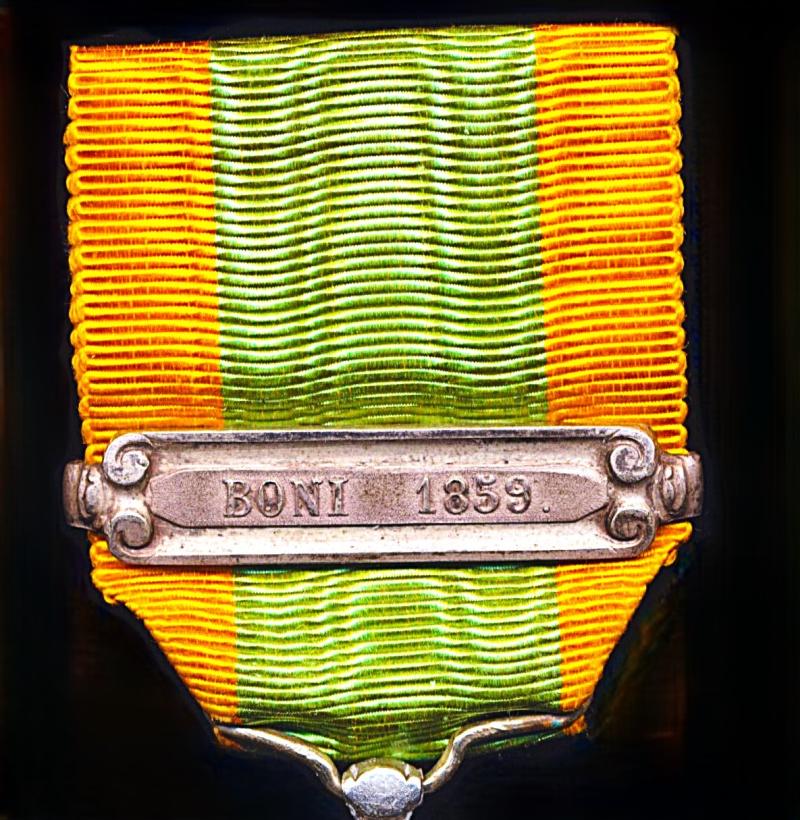
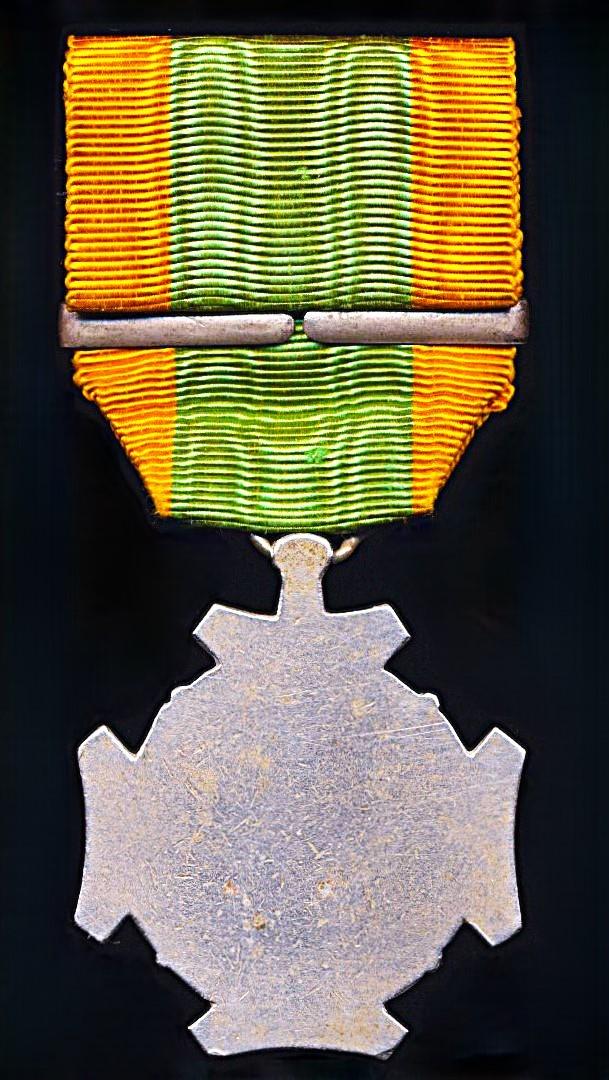
Netherlands Expeditions Cross (Expeditie-Kruis). 1st Type Portrait Obverse. With 1 x clasp (or 'Gespen') 'Boni 1859'
The Expedition Cross (Expeditiekruis, or Ereteken voor Belangrijke Krijgsbedrijven) was created in 1869, and commemorated 33 different campaigns, including 6 x retrospective campaign going back to 1846. The 33 different campaigns each commemorated by it's own distinctive clasp
The medal commemorated various Netherlands colonial campaigns in the Netherlands East Indies & adjoining areas (32 x clasps) and West Africa (1 x clasp)
Boni (also Bone, or Bone Saoraja) or Bone State was a sultanate in the south-west peninsula of what is now Sulawesi (formerly Celebes), a province of modern-day Indonesia. It came under Dutch rule in 1905, and was succeeded by the Bone Regency
The Boni Campaign 1859-60: The Second Boni War was fought from 20 February 1859 until 20 January 1860 between the colonial forces of the Dutch East Indies and the Kingdom of Boni
On 16 February 1858, the king of Boni, Ahmad Saleh, died and was succeeded by his widow, Basse Arung Kajuara. The new queen ordered Bone ships to fly the Dutch flag upside down, an act of deliberate provocation. The Dutch mounted a punitive expedition in response under General C.P. C. Steinmetz. Command of Boni troops was entrusted to Ahmad Singkarru Rukka Aru Palakka, the estranged brother-in-law of the late king. The Dutch sent a fleet from Java to Makassar to embark troops, which were then landed at Bajoe. On 19 February 1859, a small squadron detached from the main fleet to reconnoiter the Cenrana river, the northern boundary of Bone, and punish the villages along its banks At the same time, against heavy resistance, the Dutch troops marched inland and seized the capital, Watampone. The queen fled. Following an outbreak of cholera, the Dutch withdrew in April, leaving only a small garrison behind.
In the aftermath, Ahmad Singkarru Rukka was accused of treason for an insufficiently robust defence and fled to Barru. There he made a deal with the Dutch to raise an army of Bugis from Sinjai to attack Boni. In return, he would receive Kajang and Sinjai as fiefs from the Dutch after the war. Since their garrison had been decimated by disease, the Dutch landed a second larger expedition under General Jan van Swieten on 28 November 1859. They quickly seized the coastal forts and marched on Watampone, joined by Rukka's native contingent 1500 strong. Again the queen fled to Soppeng, but this time Boni representatives surrendered on 20 January 1860. The war had resulted in about 500 deaths on each side. The Dutch installed Ahmad Singkarru Rukka as the new king with the throne name Ahmad Idris. He signed a new treaty on 13 February that reduced Boni from a sovereign state allied with the Netherlands to a feudatory and turned over Sinjai, Kajang and Bulukumba
A rare seen early campaign clasp for service in Sulawesi / Celebes
Condition: GVF
Code: 25666